



When it comes to metal 3D printing with DED technology, one of the first decisions is choosing the type of feedstock. In this technology, the material is added in a controlled manner to a specific area of the part and melted using an energy source.
The feedstock in DED systems can be in the form of wire or powder, which is why two approaches, Wire DED and Powder DED, have emerged.
The difference between these two methods is not limited to the form of the feedstock. It can affect the material feeding method, material consumption, required equipment, cost, storage conditions, and the suitable application of the technology.
Therefore, if you are planning to choose a DED system for manufacturing, repairing, or restoring metal parts, it is better to examine the differences between these two methods from several aspects.
What Is DED Technology?
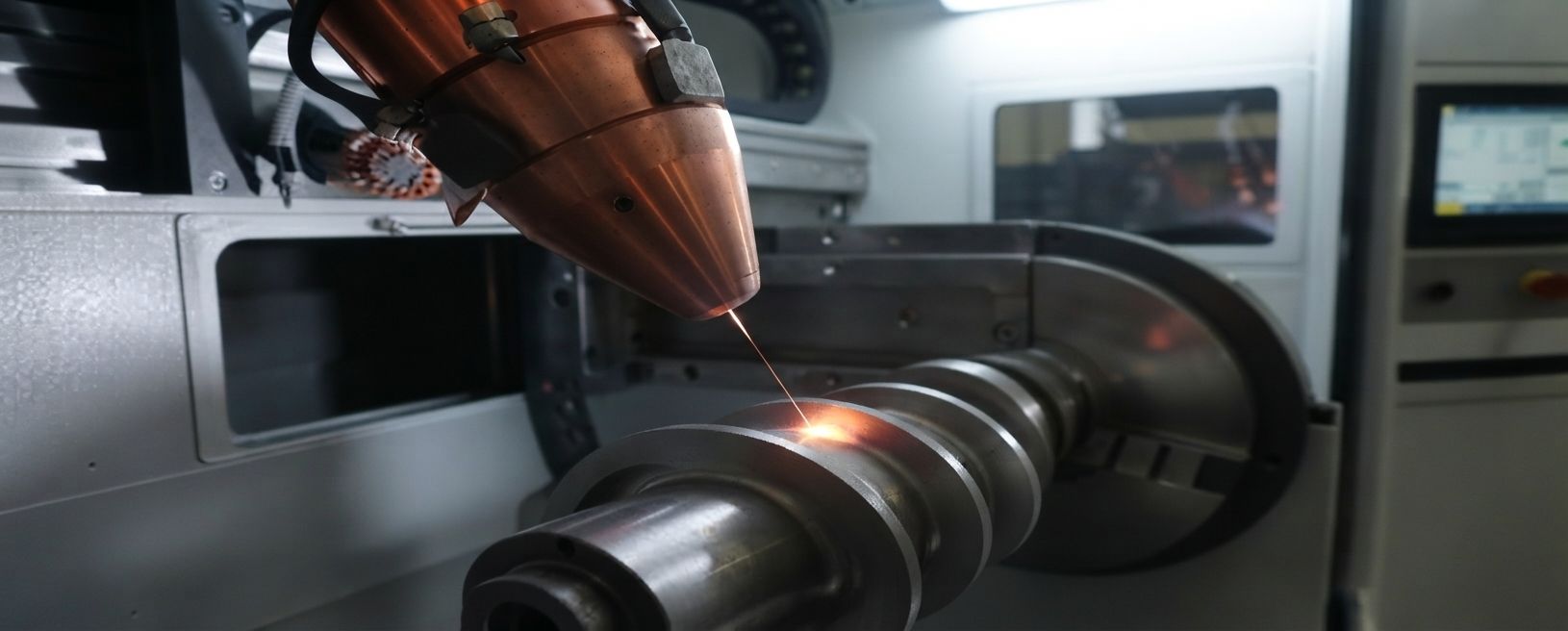
DED or Directed Energy Deposition is one of the metal additive manufacturing technologies in which the feedstock is added to a specific area of the part while energy is simultaneously applied.
The energy source melts the material, and the molten material is deposited onto the surface of the part or the previous layer. By repeating this process, a new part can be manufactured or material can be added to a specific area of an existing part.
DED can use different energy sources and feedstock materials. One type of feedstock is metal wire, while another is metal powder, which form the basis of Wire DED and Powder DED, respectively.
What Do Wire and Powder Mean in DED?
Wire and Powder are not the names of two types of metal 3D printers. These two terms refer to the form of the feedstock used in the DED process.
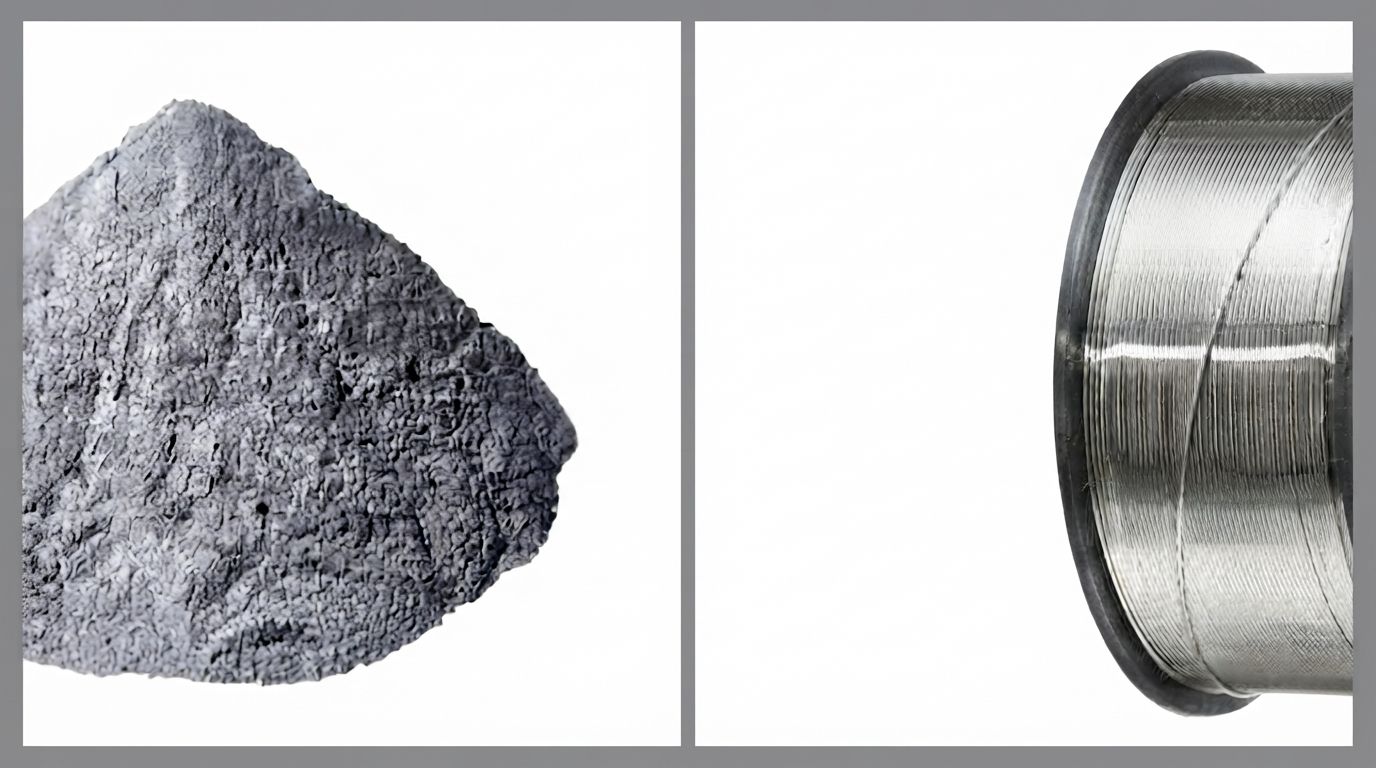
In Wire DED, the feedstock enters the machine in the form of metal wire. The feeding system delivers the wire to the deposition area in a controlled manner, and the energy source melts it.
In Powder DED, the feedstock is in the form of metal powder. The powder feeding system transfers the material to the area where the energy source is focused, and the powder particles are melted and deposited in this area.
How Does Wire DED Work?
In Wire DED, metal wire passes through a feeding system and moves toward the deposition head. An energy source such as a laser or electric arc melts the wire at a specific location, and the molten material is deposited onto the surface of the part or the previous layer.
As the deposition head or the part moves, new paths are created and these paths are deposited layer by layer on top of one another. As a result, a new part can be manufactured or the lost volume of an existing part can be restored.
The use of metal wire has made Wire DED worth considering for projects that require a significant volume of material, including the manufacturing of large parts and certain repair and restoration applications.
How Does Powder DED Work?
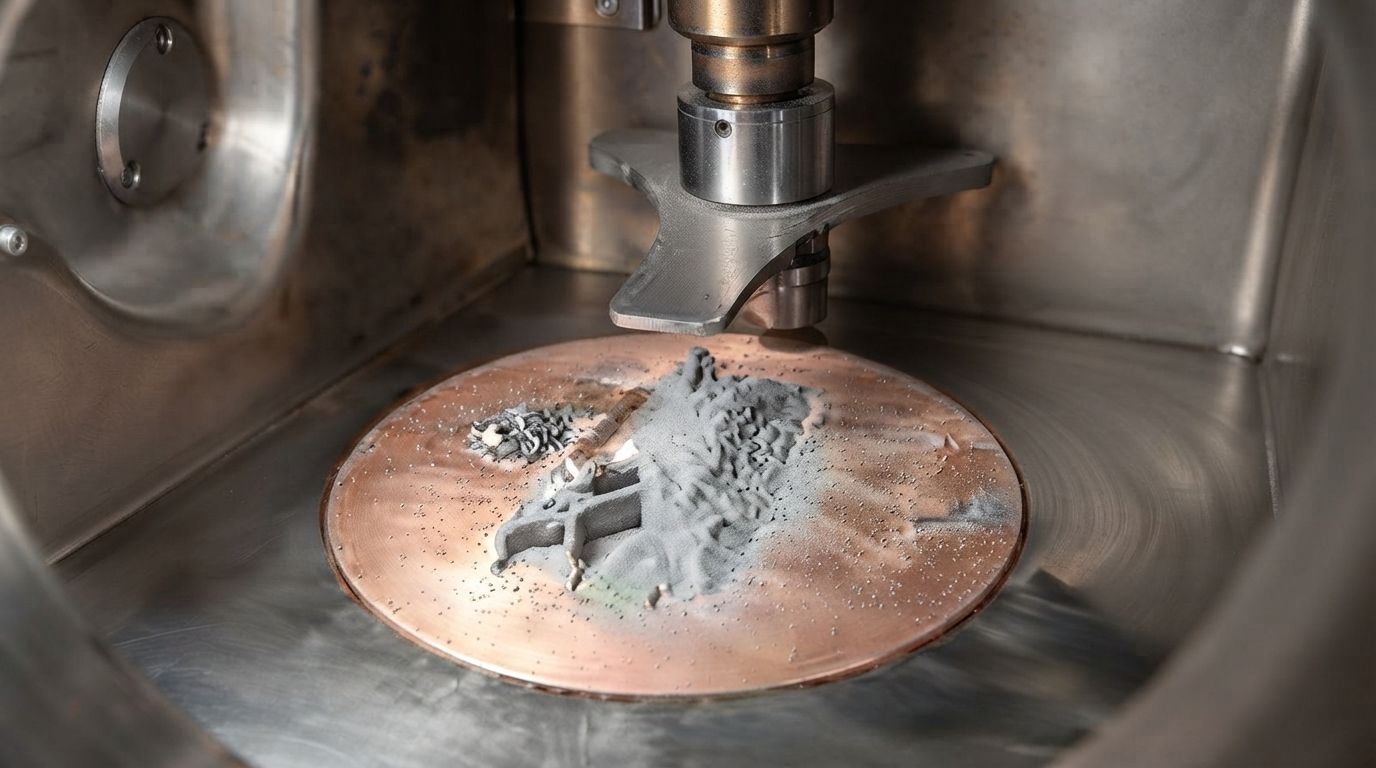
In Powder DED, metal powder is transferred to the deposition area through a feeding system. The energy source melts the powder particles in the same area, and the molten material is deposited onto the surface of the part.
In this method, the properties of the powder itself are also important. Particle size, particle shape, flowability, and the method of powder delivery can affect the behavior of the process. Therefore, feedstock management in Powder DED involves different considerations compared with a solid wire material.
Powder DED can be used in additive manufacturing, part repair, and certain coating applications, and its selection depends on the project requirements and system capabilities.
What Is the Main Difference Between Wire DED and Powder DED?
The main difference between these two technologies is the type of feedstock, but this difference can affect various parts of the process. Material feeding, material management, the amount of material actually deposited onto the part, material costs, and operational requirements are among the factors that should be considered when making a comparison.
Criterion | Wire DED | Powder DED |
|---|---|---|
Feedstock | Metal wire | Metal powder |
Feeding method | Direct wire feeding | Controlled powder delivery |
Material management | Simpler | Requires powder management |
Material consumption | Suitable for high-volume deposition | Depends on powder transfer efficiency |
Feedstock cost | More economical for some alloys | More expensive for some alloys |
Applications | Manufacturing, material addition, and repair | Manufacturing, repair, and some coating applications |
Part scale | Suitable for many large parts | Depends on system design |
Safety requirements | Management of wire and energy source | In addition to the process, powder management |
This table provides a general comparison, and the actual specifications of each machine may vary depending on the energy source, deposition head design, material used, and process parameters.
What Are the Costs of Wire DED and Powder DED?
One of the important factors when comparing Wire DED and Powder DED is the cost of the feedstock. The price per kilogram of wire or powder is only one economic factor. To calculate the actual cost, material consumption, material waste, deposition rate, and post-processing operations should also be considered.
A reputable website discussing Powder DED technology has examined the price difference between wire and powder for certain alloys.
For example, this company has reported the price of stainless steel wire at around $15 per kilogram, while similar powder costs more than $60 to $80 per kilogram.
Therefore, if a project requires a large amount of material, the purchase price of the feedstock alone is not sufficient. The amount of material that actually becomes part of the component is also important and can affect the final production cost.
Is Wire DED Always Cheaper?
No. It cannot be concluded solely from the price of wire and powder that Wire DED has a lower cost in every project.
The alloy type, machine price, auxiliary equipment, deposition rate, machining requirements, and number of parts all affect the final cost.
On the other hand, Powder DED may have its own advantages in projects that require specific deposition characteristics or a particular material.
Therefore, an economic comparison should be based on the total process cost, rather than only the price of the feedstock.
Safety Differences Between Wire DED and Powder DED
The type of feedstock also creates differences in the safety requirements of these two methods. In Wire DED, the feedstock is in the form of metal wire, so there are no concerns related to the dispersion and management of powder particles.
In Powder DED, powder storage and transfer become more important. The characteristics of the powder, storage conditions, and the way it is transferred should be controlled according to the material and system being used.
Therefore, when selecting Powder DED equipment, in addition to the machine's performance, the requirements associated with handling metal powder should also be considered.
What Are the Applications of Wire DED and Powder DED?
Both methods can be used to manufacture metal parts as well as for certain repair and restoration applications.
However, the type of project and the amount of material required may make one of the two methods more suitable for a specific application.
Due to its use of wire and its ability to deposit a high volume of material, Wire DED has attracted attention in projects such as manufacturing large parts, adding material to existing components, and restoring certain industrial parts.
Powder DED is also used in applications such as powder deposition, repairing specific areas, and certain coating processes.
Which Method Is More Suitable for Part Repair?
The choice between Wire DED and Powder DED for part repair depends on the type of damage and the amount of material required. If a significant portion of a large part needs to be restored, Wire DED can be one of the options worth considering.
In contrast, Powder DED can also be used for certain localized repairs or for creating a coating on the surface of a part. In both cases, the part material, alloy of the added material, dimensions of the damaged area, and required precision should be evaluated.
After deposition, machining or other post-processing operations may also be required. Therefore, the technology should be selected by considering the entire repair process.
Which Method Is More Suitable for Large Parts?
Wire DED is one of the methods that has attracted attention for manufacturing large metal parts and depositing a significant volume of material.
The use of metal wire and its continuous feeding can provide a practical advantage for projects that require a large amount of material.
For example, when manufacturing a large part, part of the volume can be created through an additive process and the required surfaces can then be machined to achieve precise dimensions.
The same approach can also be considered in certain repair and restoration projects.
What Factors Should Be Considered When Choosing Wire DED or Powder DED?
If you are planning to choose between these two methods for an industrial project, you should first determine the project requirements. The most important factors include:
Part material and required alloy
Part dimensions and weight
Required material volume
Project purpose: manufacturing, repair, or coating
Required precision and surface quality
Feedstock price and availability
Material waste
Equipment and safety requirements
Machining and post-processing
This information helps ensure that the technology is selected based on the actual project requirements rather than limiting the comparison to simply wire or powder.
Choosing Metal 3D Printing Equipment for Industrial Projects
If your project involves manufacturing large parts, adding material, or repairing industrial components, evaluating the capabilities of a DED system can be one of the options worth considering. At this stage, the part specifications and process requirements are more important than a general comparison of the two types of feedstock.
Vandad Sanat operates in the field of metal additive manufacturing and related metal 3D printing equipment and offers Vandad Sanat metal 3D printers for industrial applications. If you have the specifications of the part, material, and project objectives, you can contact Vandad Sanat experts to evaluate the appropriate option.
- Phone: 09102017107
Conclusion
Wire DED and Powder DED are both Directed Energy Deposition methods for metal additive manufacturing, but their main difference lies in the type of feedstock.
Wire DED uses metal wire, while Powder DED uses metal powder, and this difference can affect material feeding, consumption, cost, and process requirements.
When choosing between these two methods, it is not enough to consider only the price of wire and powder or the deposition rate. The part material and dimensions, required material volume, application, desired precision, material waste, equipment, and post-processing operations should also be evaluated.
Therefore, the final selection should be based on the actual project specifications and the total process cost.
Frequently Asked Questions
1. Are Wire and Powder the names of two types of 3D printers?
No. Wire and Powder refer to the type of feedstock used in the DED process. Depending on the feedstock type and technology used, the machine can be designed to feed either wire or powder.
2. What is the main difference between Wire DED and Powder DED?
The main difference is the type of feedstock. Wire DED uses metal wire, while Powder DED uses metal powder. This difference also affects the way the material is fed and managed.
3. Can Wire DED and Powder DED be used to repair parts?
Yes. Both methods can be used to repair and restore metal parts, but the type of damage, dimensions of the repair area, and amount of material required affect the choice of method.
4. What types of parts is Wire DED suitable for?
Wire DED can be considered for manufacturing large parts, adding material to existing components, and certain industrial part repair and restoration projects.
5. Is machining required after DED?
In many applications, yes. A part produced with DED may require machining or other post-processing operations to achieve the required dimensions and surface quality.
نظرات
0 نظر
دیدگاهی ثبت نشده.